

Western Australia’s coastline stretches for more than 12,000km. Home to the world’s largest fringing reef, this is a state built for ocean lovers. Whether you’re searching for one of the rarest sea lion colonies on the planet, or a wild dolphin population that’s been greeting lucky visitors for half a century, there’s something for everyone here.

Dive into the wonders of Ningaloo Reef
There’s nothing quite like floating beside the world’s largest fish. Ningaloo Reef, a 300 kilometre fringing reef running along the coast off Exmouth and Coral Bay, is one of the only places on Earth where whale sharks reliably congregate each year, typically from March through to August, with sightings in Exmouth sometimes stretching into early November.
There are many operators that you can book a trip with, such as Ocean Eco Adventures and Ningaloo Reef Whalesharks, for a full-day experience diving with these magnificent creatures.
Spotter planes guide the boat to these gentle filter-feeders, whose diet consists mostly of plankton, krill and fish eggs, and once you’re in the water, they’ll glide past close enough to make your heart stop – in the best way possible.
Most tours include a couple of snorkels on the inner reef, where turtles, manta rays and reef sharks are common sightings, before heading to the outer reef to find the whale sharks. Time your trip right and you might also catch the humpback whale migration, which runs from roughly June to November. During this period, licensed in-water interactions with these enormous mammals are also on offer. Tours depart daily from both Coral Bay and Exmouth, and Ningaloo Reef’s World Heritage status means the whole experience is tightly regulated to protect the wildlife.

The many marvels of Monkey Mia
At Shark Bay’s Monkey Mia, roughly 850 kilometres north of Perth, wild Indo-Pacific bottlenose dolphins have been swimming into the shallows to greet visitors for more than 50 years, drawing over 100,000 people annually. No tank or trainer is required, so just come on down and meet your new best friend.
Rangers from the Department of Biodiversity, Conservation and Attractions run the daily viewing sessions each morning between 7:45am and midday, offering small amounts of fish to just five adult female dolphins under strict conservation guidelines designed to keep them hunting and behaving naturally. Arrive early to secure a good spot on the sand, since the dolphins choose their own timing.
Beyond the beach, Shark Bay’s wider World Heritage area is worth lingering in: don’t miss the 3,500-million-year-old stromatolites at Hamelin Pool, thought to be some of the oldest living lifeforms on the planet, or Shell Beach, a rare stretch of coastline made entirely of tiny white shells.

The serenity of gorgeous Jurien Bay
Around 2.5 hours north of Perth, Jurien Bay Marine Park is home to one of the rarest pinnipeds on the planet, the Australian sea lion, with an estimated global population of just 6,000 to 8,000. Local operators run half-day tours out to the sea lion colonies on nearby islands, a boat trip of around 15 to 30 minutes, before you slip into the water for up to 45 minutes of pure excitement.
These “puppies of the sea” are known for twisting, flipping and showing off around snorkelers, though every interaction happens entirely on the animals’ own terms. Wetsuits, masks and snorkels are typically provided, along with a hot drink for afterwards, and the calm, clear waters of the marine park mean the sea lions aren’t the only drawcard; expect schools of fish and limestone reef structures along the way too.
Jurien Bay Oceanic Experience run daily tours, with observer tickets available for those who still want to see these adorable sea lions but would prefer to stay dry.

Wild and peaceful Rottnest Island
Just a short ferry ride from Fremantle or Hillarys, Rottnest Island hides an underwater world that punches well above its weight. Thanks to the warm Leeuwin Current sweeping down from Indonesia, the island’s sheltered bays support a rare mix of tropical, subtropical and temperate species, over 400 kinds of fish in total, plus green turtles, stingrays and even historic shipwrecks.
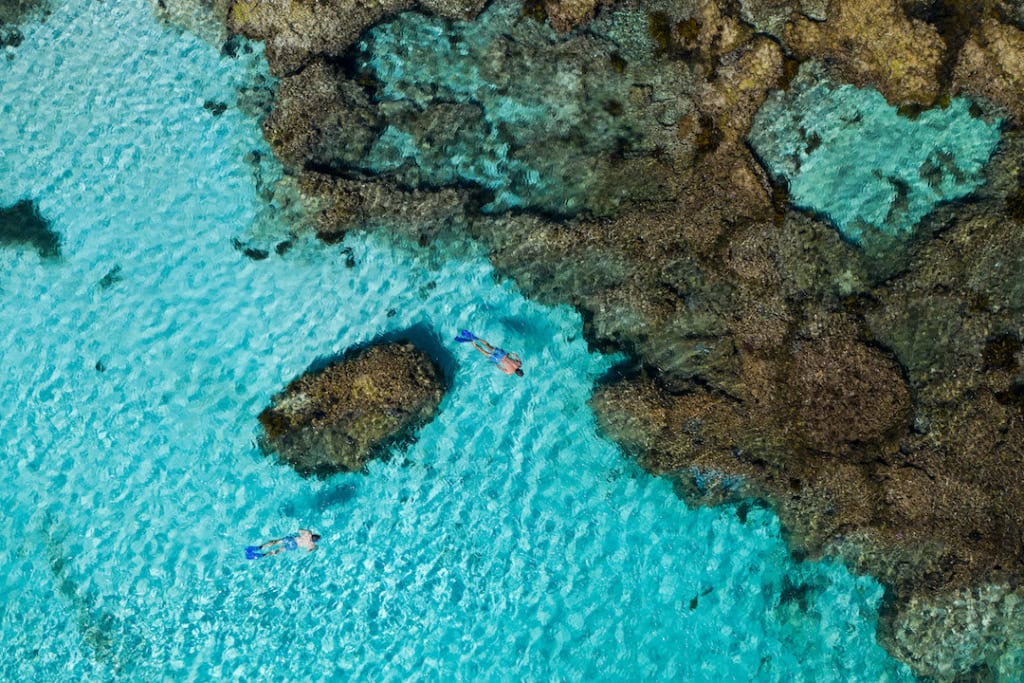
The Parker Point and Little Salmon Bay snorkel trails are the pick for beginners, marked by buoys and seabed information plaques that guide you past coral gardens and seagrass meadows without a wetsuit in sight.
More adventurous snorkelers can head to Henrietta Rocks, where they’ll find the wreck of the Shark – a vessel that broke its moorings in Fremantle back in 1939. It now lies fifty metres from shore, encrusted with reef and constantly circled by fish.
If you’re keen to learn from the experts, Eco Express Boat Tours offer a 90-minute tour around the island with expert commentary. As you sail across turquoise waters, you will learn all about the limestone cliffs, hidden bays and coastline of this iconic island. Plus, your guide will point out long-nosed fur seals sleeping on the rocks, osprey soaring above their nests, dolphins in the waves, and even migrating whales depending on the season.

Busselton Jetty Underwater Observatory
For those who’d rather stay dry, Busselton Jetty offers a different kind of marine magic. Ride the solar-powered train 1.7 kilometres along the Southern Hemisphere’s longest timber-piled jetty, stretching 1,841 kilometres into Geographe Bay, then descend eight metres below the surface into an underwater observatory. There are only six of these in the world.
Through eleven viewing windows in the 9.5 metre observation chamber, you’ll spot more than 300 species of fish, coral and sponges thriving on what’s now Australia’s largest artificial reef, built entirely by the jetty’s own timber pylons over more than 150 years. It’s a rare chance to witness a genuine underwater ecosystem without getting so much as a toe wet, making it an easy win for travellers short on time or keen to avoid the open ocean.
You can book a full observatory tour, which includes return train tickets, as well as a guided tour of the observatory and time to explore for yourself, or choose the ‘Mini Tour’ option to experience this magical place at your own pace.
From the gentle giants of Ningaloo to the curious pups of Jurien Bay, Western Australia’s marine experiences prove that some of the best wildlife encounters on Earth don’t require a passport to the tropics. Whether you’re chasing bucket-list swims or content to watch the action through glass at Busselton, the state’s coastline delivers something genuinely unforgettable at every turn.
Enjoyed this story on marine experiences in Western Australia? Check out our story on Monkey Mia here.
Rex flies to Western Australia. Book your flights here and check out the route map below for more details.
