

Robert Macklin, prolific author of more than 30 books, has lived in Canberra for decades. His latest work, The Man Who Planted Canberra, tells the story of the man who planted more than three million trees and shrubs from around the world to create the horticultural wonders of our capital city.
We sat down with him to chat about his inspiration, research process, and why everyone should know the name Charles Weston.
How were you first introduced to Charles Weston and what stood out about his story?
I was first introduced to Charles Weston when two members of Canberra’s heritage group approached me about writing his story.
I was immediately drawn to his devotion to his task. In fact, he spent eight years working by himself in Canberra while his wife and three lovely daughters remained in Sydney for the girls’ education.
Over the course of many days and weeks in the National Library of Australia, I was able to piece together Weston’s life, spanning all the way back to 1911 when he first came to Canberra.
What were the biggest challenges in bringing this story to life?
The biggest challenge in drafting this book was getting to know Charles Weston. I had all the facts, but I couldn’t access his thoughts and feelings. Sadly, one of Weston’s daughters had burned most of the letters between him and his wife, Minimia. Fortunately, I discovered some that escaped the flames.
You worked closely with Dr John Gray before his unfortunate passing. What role did he play in shaping this text?
Dr John Gray’s thesis on Weston was very useful in the crafting of this story. He compiled scientific evidence of Weston’s remarkable work in testing hundreds of trees from around the world to see which were suitable for Canberra’s specific soil and weather conditions.
Canberra’s horticulture is unique, and the city has some of the most diverse species of trees and shrubs in the world. It makes the city wonderfully attractive, and is also a great bonus in a time of climate change.

Why has it taken so long for Charles Weston’s story to come to light?
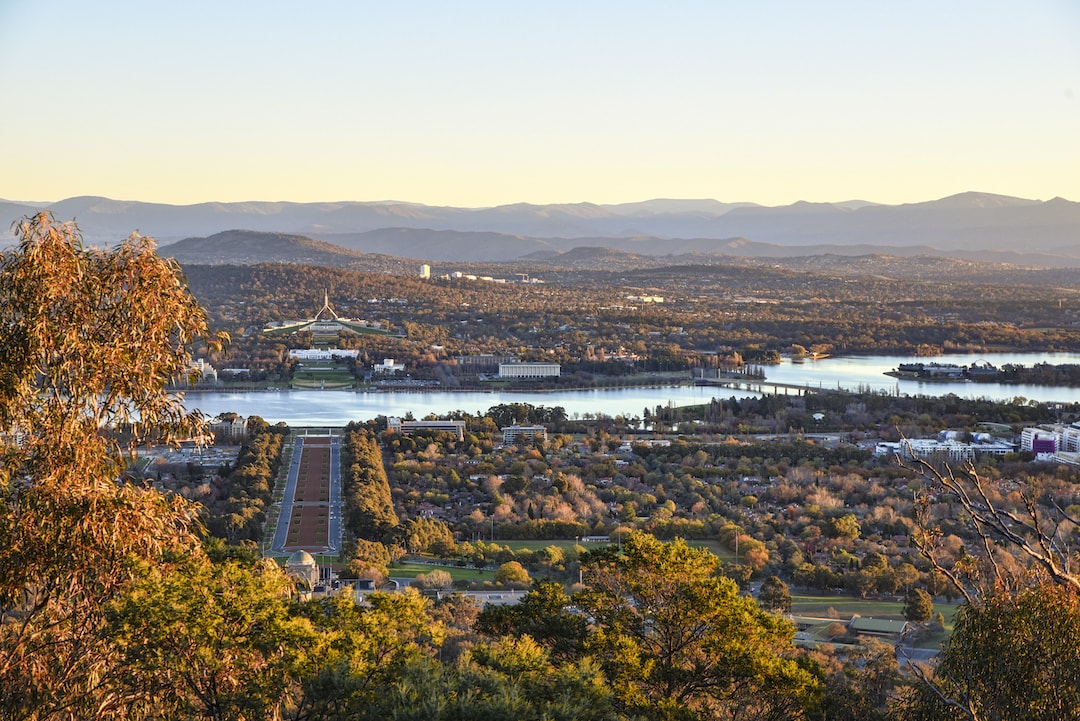
Until now, the designer Walter Burley Griffin and his wife Marion received all the credit for Canberra’s design. But Griffin’s design was changed by the government, and he didn’t consider the city’s treescapes in his plan.
In 1920, he tried to change the blueprint back to his original design, with some suggested tree species, but he was dismissed. That’s when Weston took over, transforming Canberra into a Garden City by 1927 when Parliament House was opened.
Interestingly, Canberra’s central lake was named after Griffin, even though he didn’t design it as a lake, but as three ‘basins’.
What was your favourite thing about writing this story?
I’m very proud to be telling the true story of our National Capital at last.
I love Canberra’s beauty and its convenience. It’s a wonderful place to bring up children, and an even better place to grow old in.
What’s next for you?
I’m 70,000 words into a new book – a novel set in a nearby coastal resort. I can’t wait to share this story with the world.
Interested in hearing more from authors like Robert Macklin? To read our interview with Edmund Goldrick, author of ANZAC Guerrillas, click here.